
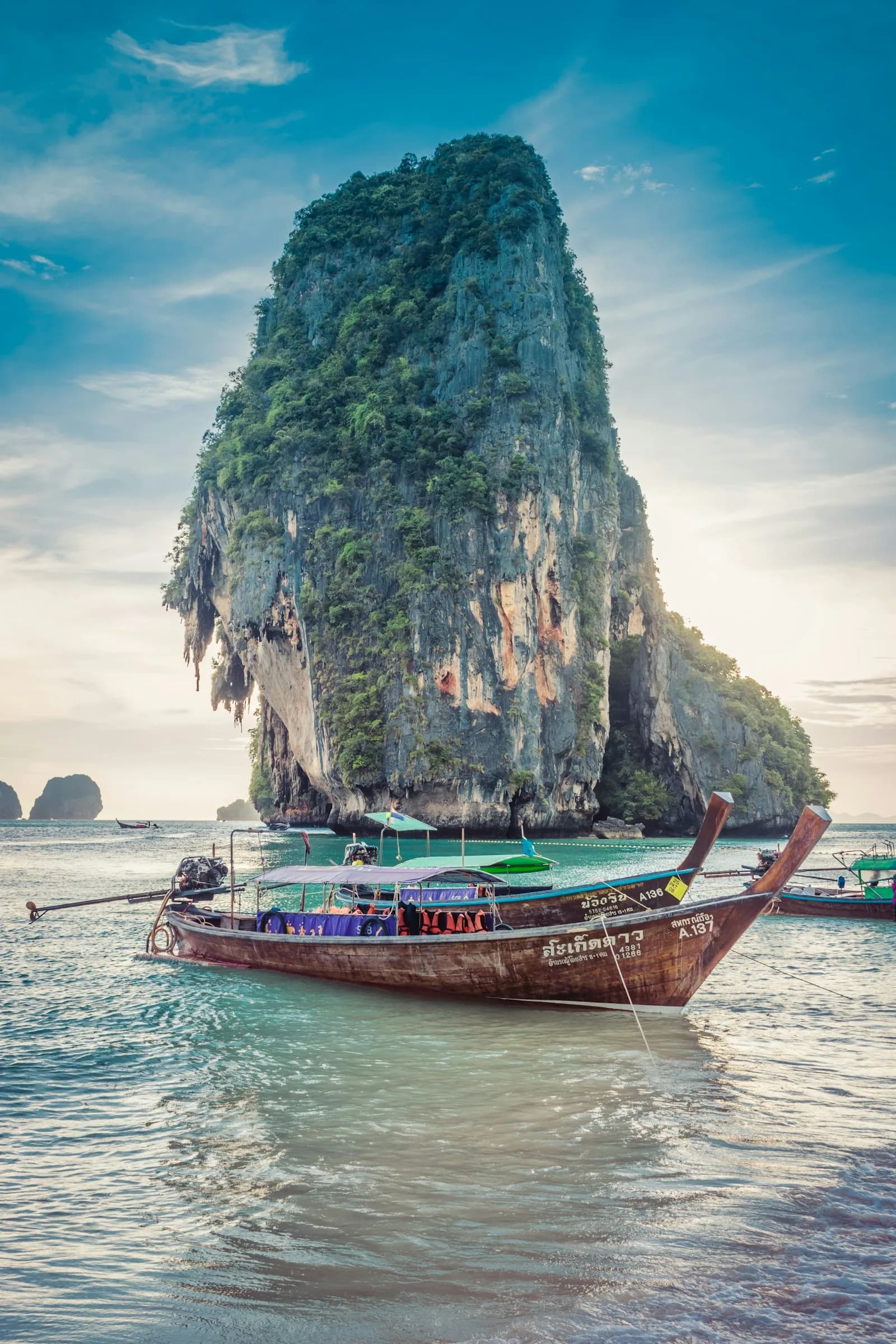
Phuket is not only about beaches. The Old Town, temples, viewpoints, islands, markets and nature trails give the island a depth that is important to both the tourist and the future resident.

If you judge Phuket by its beach alone, the island seems simpler than it is. In fact its strength is the combination of the sea, the old town, temples, markets, viewpoints, island trips and normal everyday infrastructure. This is what makes Phuket not just a resort, but a place where people return for a long time.
The first must-see route is Phuket Old Town. TAT describes the old town as an area of cultural melting pot, Sino-Portuguese architecture, local food and historic houses. Here you don’t need to run through the checklist, but walk in the morning or late afternoon: Thalang Road, Dibuk Road, Krabi Road, cafes in old shophouses, local desserts, Sunday Walking Street and museums give Phuket a completely different character.

Wat Chalong is the main temple complex of the island and a good point to realize that Phuket is not reduced to a tourist façade. You should go here with respect for the place: covered shoulders, calm demeanor, no beachwear. Big Buddha also remains one of the most recognizable points in the south of the island, but after closures and access changes in 2024-2026, it is better to check its status before traveling using fresh local sources.
Viewpoints give the island scale. Promthep Cape is beautiful at sunset, Windmill Viewpoint is often calmer, Karon Viewpoint shows the classic line of three beaches, and points over Kata and Chalong help you get a feel for the island's topography. For the first trip, two or three viewpoints are enough. For life on the island, they become not an attraction, but a way to reboot.
It is better to choose island trips according to the season and physical fitness. Racha, Coral, Mai Thon, Phi Phi, Phang Nga Bay are different scenarios. Somewhere there is more snorkeling, somewhere there are more beautiful rocks, somewhere the road with children is easier. In the high season the sea is usually friendlier; in the green season you need to look at the forecast more carefully and not skimp on the operator.
Markets and food are a separate attraction. Chillva Market, Naka Market, Sunday Walking Street in Old Town and local food courts give more insight into the island than just another random tourist restaurant. If you are looking at Phuket for life, the markets show the area more honestly: who goes there, what they buy there, how the area lives in the evening.
For nature, worth seeing are Sirinat National Park in the north, Nai Yang, Mai Khao, mangrove trails, waterfalls in the rainy season and green hills around Kathu and Chalong. Phuket is not as wild as its neighboring provinces, but it has natural areas that are important not to be reduced to a photo spot. A good route leaves behind not only photos, but also an understanding of how the island works.
From a real estate perspective, landmarks are also important. An area close to strong leisure scenarios, good restaurants, family activities, the beach and normal logistics is easier to maintain demand. The tourist comes for an impression, but the tenant returns to where it is convenient to repeat the impression.