
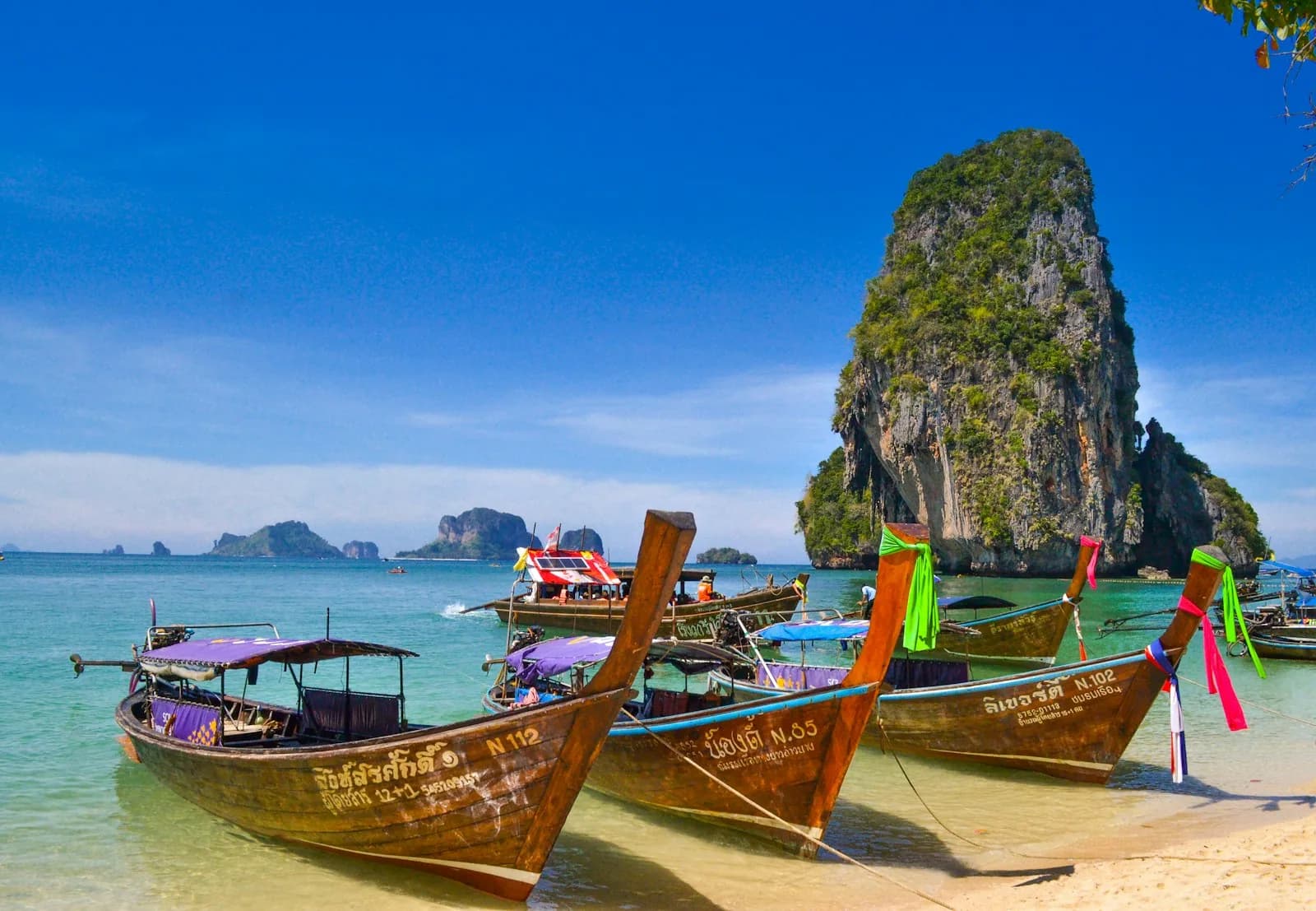
Phuket has long ceased to be just a resort scenery. This is already a separate market where lifestyle, infrastructure and investment logic work together.

If you still describe Phuket with the formula “sea, palm trees, passive income,” the market has already moved on. And he left quite confidently. Phuket today is interesting not because it is just a beautiful resort. There are enough beautiful resorts in the world. It is interesting because it has become a rare hybrid: an island lifestyle market, an international tourist hub, a place for long-term residence, and at the same time a real estate market that is already out of adolescence.
What was previously sold as “buy an apartment by the sea and smile” is now being sold much more convincingly: through infrastructure, transport connectivity, limited land, quality of service, international brands and mature competition between projects. A good market doesn't have to be noisy at all. It must be understandable.
In 2024, Phuket earned more than 481.4 billion baht in tourism income and received 12.9 million tourists. This is not just a pretty figure for the island. This is a direct signal: the local economy has not lived in the “high season, then silence” mode for a long time. Tourism here is no longer an episode, but a supporting structure. In 2025, Phuket Airport handled about 17.4 million passenger movements, which means it was operating significantly above its designed capacity. When infrastructure begins to choke not from weakness but from demand, it is useful for investors to take a closer look.
But the main focus is different. Phuket no longer depends on one single buyer persona. Not only tourists go to the island for two weeks and not only investors who want to rent out a property for the holidays. There is a growing layer of those who come for a long time: families with children, business owners, remote specialists, people who divide their lives between several countries. And this changes the demand itself. A person needs a beautiful view for a week. For six months a person needs a school, a road, a clinic, a supermarket and a neighborhood that doesn’t fall apart after nine in the evening.
That is why Phuket today cannot be analyzed only by its beaches. It needs to be analyzed as a system: where is the new transport corridor, where strong commerce appears, where international services are concentrated, where the object is managed after the keys are handed over, and not just sold beautifully at the start. And where the project has a chance to not look tired three years after completion.
According to C9 Hotelworks, at the beginning of 2025, Phuket's active supply included approximately 40,600 residential units in 343 projects. This means a simple thing: the time when almost any new object could be justified by the very fact “it’s in Phuket” is ending. Now you have to choose not an island in general, but a specific microlocation, ownership strategy and operating model.
Phuket today is not a magic “get rich by the sea” button. And this is just a good sign. Truly strong markets look exactly like this: not like a fairy tale, but like a territory where money meets quality of life, and a square meter begins to depend not on promises, but on real urban logic.